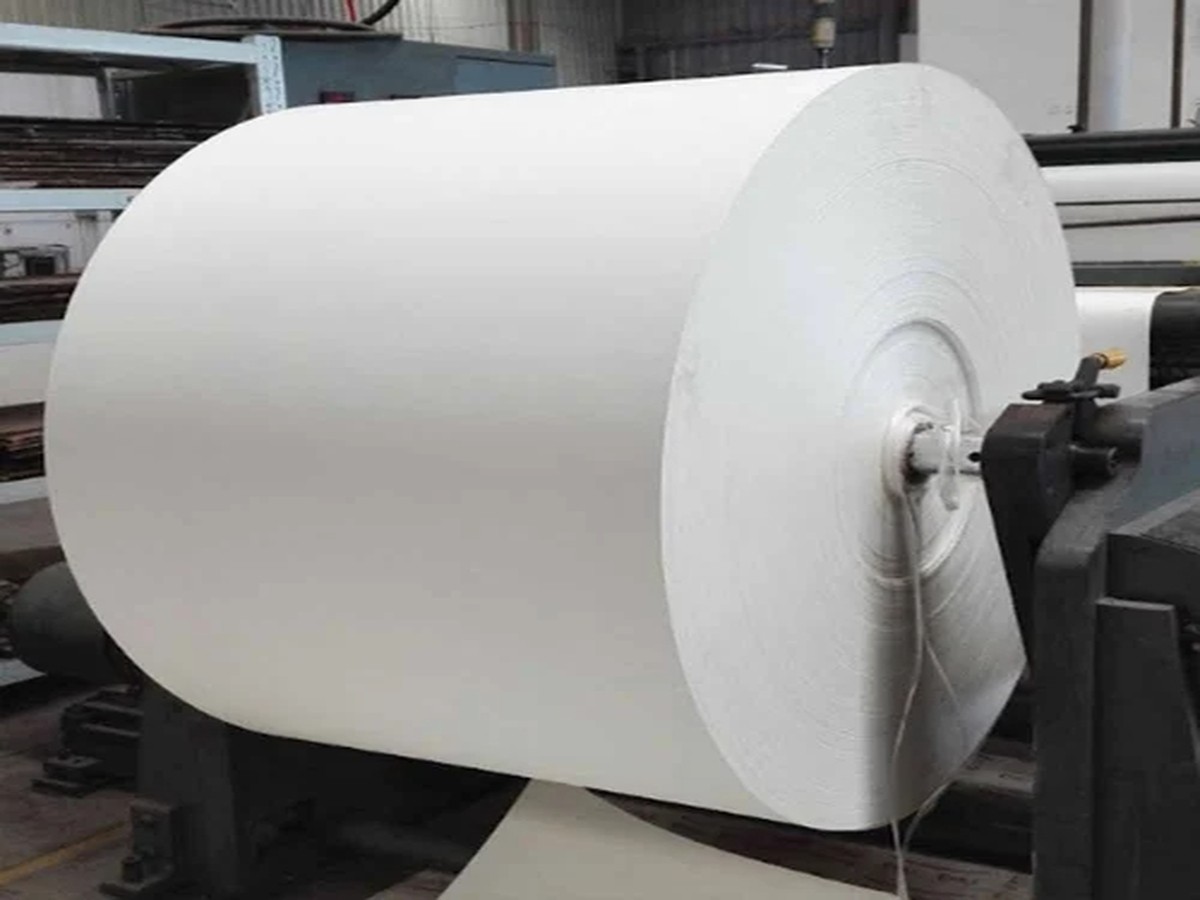
When people think about playing cards, they usually focus on the printed design, artwork, or game itself. However, behind every professional playing card is a specially engineered material — playing card paper.
Unlike ordinary paper, modern playing card stock is developed to meet demanding requirements including durability, flexibility, opacity, printing quality, and consistent handling performance.
Through decades of material development, playing card paper has evolved from simple paper sheets into a specialized industrial material supporting the global playing card industry.
1. The Evolution of Playing Card Paper
In the early stages, playing cards were produced using basic paper materials. Although these papers could be printed easily, they had several limitations:
- Poor durability
- Low resistance to bending
- Easy transparency
- Short service life
As playing cards became more widely used in entertainment, competitions, casinos, and professional games, higher material standards were required.
Manufacturers began improving paper structures by combining multiple layers and optimizing fiber composition. The result was a new generation of professional playing card paper with:
- Better stiffness
- Higher opacity
- Improved surface smoothness
- Longer lifespan
Playing card paper gradually became a specialized material rather than ordinary printing paper.
2. Why Playing Cards Need Professional Paper
A playing card is not only a printed product. It is also a precision tool used in competitive and entertainment environments. A high-quality playing card needs to achieve several functions:
1) Anti-Cheating Performance
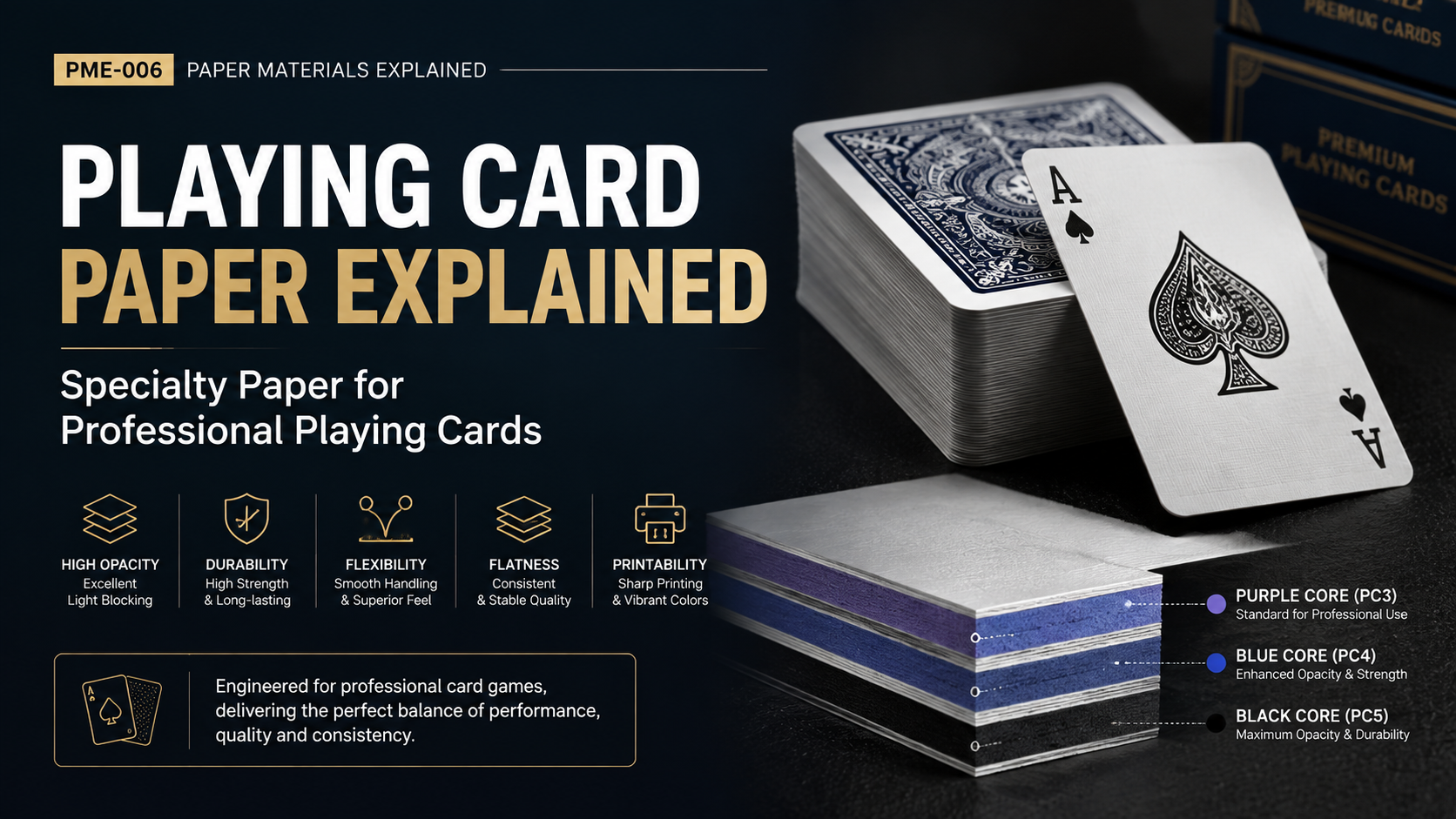
Opacity is one of the most important properties. Players should not be able to identify card values from the back side. Professional playing card paper uses special core structures to prevent light penetration and maintain fairness during games.
2) Durability and Repeated Use
Playing cards may be handled hundreds or thousands of times. The paper needs:
- Strong folding resistance
- Good recovery after bending
- Stable thickness
- Consistent hand feeling
This is why professional card stock requires carefully designed fiber structures.
3) Premium Appearance and Printing Quality
Modern playing cards are also collectible products. The paper surface must support:
- High-resolution printing
- Smooth color reproduction
- Coating and finishing processes
- Special effects
The material directly affects the final appearance and user experience.
3. The Development of Professional Playing Card Paper Grades
With increasing market requirements, different grades of playing card paper were developed. Among them, PC3, PC4 and PC5 represent different performance levels.
PC3 Playing Card Paper
PC3 is commonly used for standard playing card applications. Main characteristics:
- Balanced performance
- Good opacity
- Stable handling
- Cost efficiency
It provides a reliable solution for large-volume card production.
PC4 Playing Card Paper
PC4 improves the structure and performance compared with PC3. Features include:
- Higher opacity
- Better stiffness
- More premium hand feeling
- Improved durability
It is suitable for higher-quality playing cards requiring better user experience.
PC5 Playing Card Paper
PC5 represents a higher-performance card material. Advantages:
- Maximum opacity
- Excellent durability
- Professional handling performance
- Premium applications
It is widely used where quality and consistency are critical.
4. A Specialized Industry Chain Has Formed
Today, playing card paper is no longer just a paper product. A complete industrial chain has developed around it:
- Specialty Paper Manufacturing
- Core Structure Development
- Paper Coating & Surface Treatment
- Professional Printing
- Card Cutting & Finishing
- Finished Playing Card Production
Each stage influences the final card performance. The development of playing card paper has created a professional ecosystem connecting paper manufacturers, printing companies, and playing card producers worldwide.
5. The Future of Playing Card Paper
As playing cards continue to serve entertainment, competition, education, and collectible markets, material requirements continue to evolve. Future playing card papers will focus on:
- More sustainable fibers
- Improved recycling performance
- Better printing compatibility
- Higher consistency
- Advanced surface technologies
The playing card industry will continue to rely on specialized paper solutions designed for performance and reliability.
Conclusion
Playing card paper has transformed from ordinary paper into a highly engineered specialty material. Through continuous innovation in fiber structure, core design, and manufacturing technology, modern playing card paper provides:
- Fairness through opacity
- Reliability through durability
- Premium experience through quality
Understanding the difference between materials such as PC3, PC4, and PC5 helps manufacturers choose the right solution for different playing card applications.
At Salon Paper, we continue to provide professional specialty paper solutions for global customers, supporting the development of high-quality playing card and packaging industries.
Related Articles from Our Library
- ➤ Playing Card Paper Explained: Structure, Performance and Key Specifications (PME-005) — The development history of playing card paper
- ➤ Playing Card Paper Technical Specifications — Detailed GSM, caliper, and stiffness data
- ➤ Playing Card Paper Sourcing Guide — How to select the right card stock supplier
Ready to Get Started?
Looking for professional playing card paper or specialty paper solutions? Visit www.salonpaper.com for free samples and competitive pricing.
Contact Us for Samples