📋 TL;DR — Points clés
Cet article couvre : les matériaux d'emballage en papier
This article covers: paper packaging materials
Idéal pour : les acheteurs d'emballages et les professionnels du secteur
📅 17 juillet 2026 📖 10 min de lecture 🏷️ Actualités du secteur
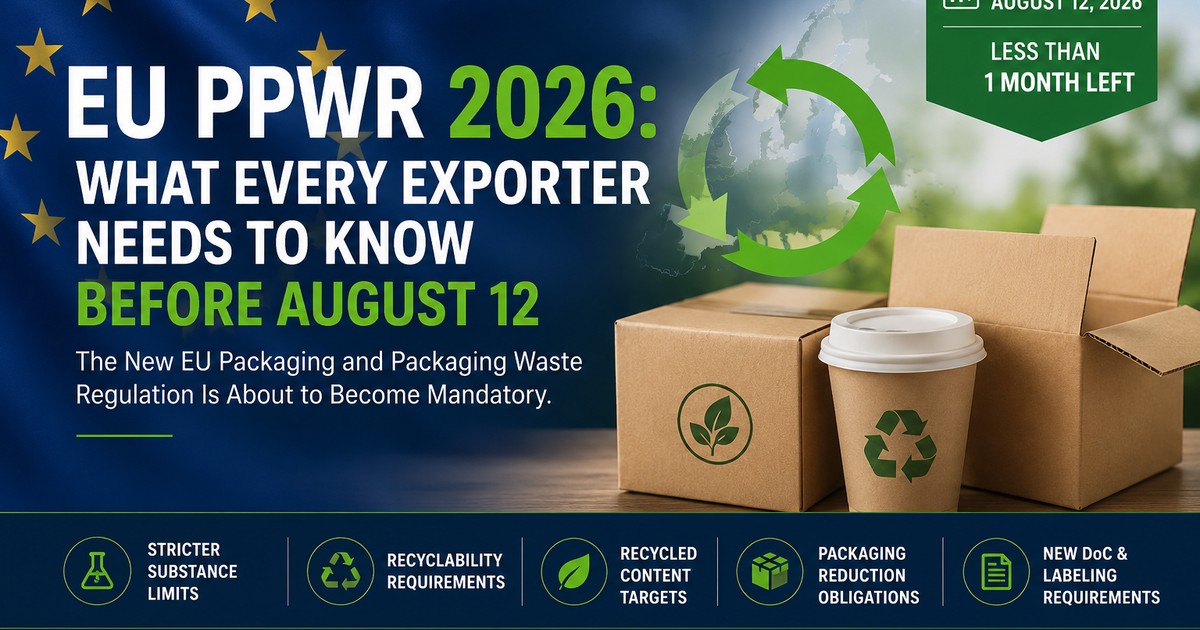
Le règlement européen sur les emballages et les déchets d'emballages (PPWR) deviendra pleinement applicable le 12 août 2026, laissant aux entreprises moins d'un mois pour assurer leur conformité.
The EU Packaging and Packaging Waste Regulation (PPWR) will become fully applicable on 12 August 2026, leaving businesses with less than one month to ensure compliance.
This is not a routine regulatory update. It represents the largest reform of EU packaging legislation in nearly 30 years. More importantly, PPWR is a Regulation, not a Directive, meaning the same legal requirements apply directly across all 27 EU Member States without national transposition.
For manufacturers, exporters, brand owners, and packaging suppliers, packaging compliance is no longer a supporting task — it is now a prerequisite for market access.
Le nouveau règlement introduit un cadre juridique harmonisé qui affecte pratiquement tous les types d'emballages mis sur le marché de l'UE.
Les principaux changements comprennent :
Un règlement unique, directement applicable dans tous les États membres de l'UE
- La conformité des emballages devient une exigence obligatoire d'accès au marché
- Des contrôles plus stricts sur les substances dangereuses
- Des normes de performance de recyclabilité obligatoires
- Des exigences minimales de contenu recyclé
- Des obligations de réduction des emballages
- De nouvelles exigences en matière de documentation et d'étiquetage
- 1. Restrictions sur les substances dangereuses (effet au 12 août 2026)
Les emballages doivent respecter des limites strictes concernant les métaux lourds :
Plomb (Pb)
- Cadmium (Cd)
- Mercure (Hg)
- Chrome hexavalent (Cr VI)
- La concentration combinée ne doit pas dépasser 100 mg/kg.
Pour les emballages en contact avec les aliments, le PPWR introduit également certaines des limites les plus strictes au monde concernant les PFAS :
For food-contact packaging, PPWR also introduces some of the world's strictest limits on PFAS:
- Individual non-polymeric PFAS: <25 ppb
- Total non-polymeric PFAS: <250 ppb
- Total fluorine in polymeric PFAS: ≤50 ppm
Le PPWR établit des classes de performance de recyclabilité pour tous les emballages.
À partir du 1er janvier 2030
Tous les emballages doivent être classés comme :
Grade A
- Grade B
- Grade C
- Les emballages dont la performance de recyclabilité est inférieure à 70 % ne seront plus autorisés sur le marché de l'UE.
Packaging with recyclability performance below 70% will no longer be permitted on the EU market.
Seuls les emballages de Grade A et de Grade B resteront conformes. Les emballages de Grade C seront progressivement retirés.
Only Grade A and Grade B packaging will remain compliant. Grade C packaging will be phased out.
Le PPWR fixe des objectifs obligatoires de contenu recyclé pour les emballages en plastique.
Type d'emballage | 2030 | 2040 Emballages PET en contact avec les aliments | ≥30 % | ≥50 % Emballages non PET en contact avec les aliments | ≥10 % | ≥25 % Bouteilles de boissons en plastique à usage unique | ≥30 % | ≥65 % Autres emballages en plastique | ≥35 % | ≥65 %
| Packaging Type | 2030 | |
|---|---|---|
| PET food-contact packaging | ≥30% | |
| Non-PET food-contact packaging | ≥10% | |
| Single-use plastic beverage bottles | ≥30% | |
| Other plastic packaging | ≥35% |
4. Exigences de réduction des emballages
À partir de 2030, les entreprises devront éliminer les emballages inutiles. Exemples :
Aucune couche inutile ni espace vide décoratif
- Les emballages de commerce électronique et de transport doivent maintenir un taux d'espace vide de 50 % ou moins
- E-commerce and transport packaging must maintain an empty-space ratio of 50% or less
- Clarifications importantes sur la conformité
Définition de l'emballage
Qu'un article soit considéré comme un emballage dépend de sa fonction, et non simplement de son apparence. Par exemple :
Whether an item is considered packaging depends on its function, not simply its appearance. For example:
- Les poches de perfusion médicales n'en sont pas
- Qui est responsable ?
Le PPWR distingue différents opérateurs économiques.
Fabric
Manufacturer: The entity identified on the packaging is responsible for technical compliance.
Producer: The company that first places the packaged product on the EU market is responsible for Extended Producer Responsibility (EPR) obligations and may need separate registration in each applicable Member State.
Declaration of Conformity (DoC)
From 12 August 2026, packaging must be supported by an EU Declaration of Conformity (DoC). Even exempt packaging categories must retain documentation demonstrating the basis for exemption.
New Labeling Requirements
PPWR introduces harmonized labeling requirements, including manufacturer or importer identification, replacing many existing national labeling practices.
Immediate Actions for Businesses
Companies exporting to the EU should act now:
- Audit all existing packaging formats
- Identify responsibilities across the supply chain
- Evaluate compliance against all four PPWR requirements
- Prepare and sign the required Declaration of Conformity before 12 August 2026
- Establish an ongoing monitoring process for future implementing acts and guidance
Business Risks of Non-Compliance
Failure to comply with PPWR may result in:
- Products being prohibited from entering the EU market
- Mandatory product recalls
- Administrative penalties
- Loss of market access
These obligations apply regardless of whether your company has a legal entity within the European Union. If your packaged products enter the EU market, PPWR requirements apply.
Final Thoughts
PPWR marks a fundamental shift in how packaging is regulated in Europe. Compliance is no longer simply about meeting environmental expectations — it is becoming a core requirement for doing business in the EU.
Companies that begin reviewing their packaging strategies now will be better positioned to minimize compliance risks, protect customer relationships, and maintain uninterrupted access to one of the world's largest markets.